AI-Powered Docker Repo Auditor
Six LLM agents read what three scanners found and report what is wrong with a container image. When an agent fails, the report says so rather than quietly scoring on less evidence.
View the repository on GitHub →Code graph
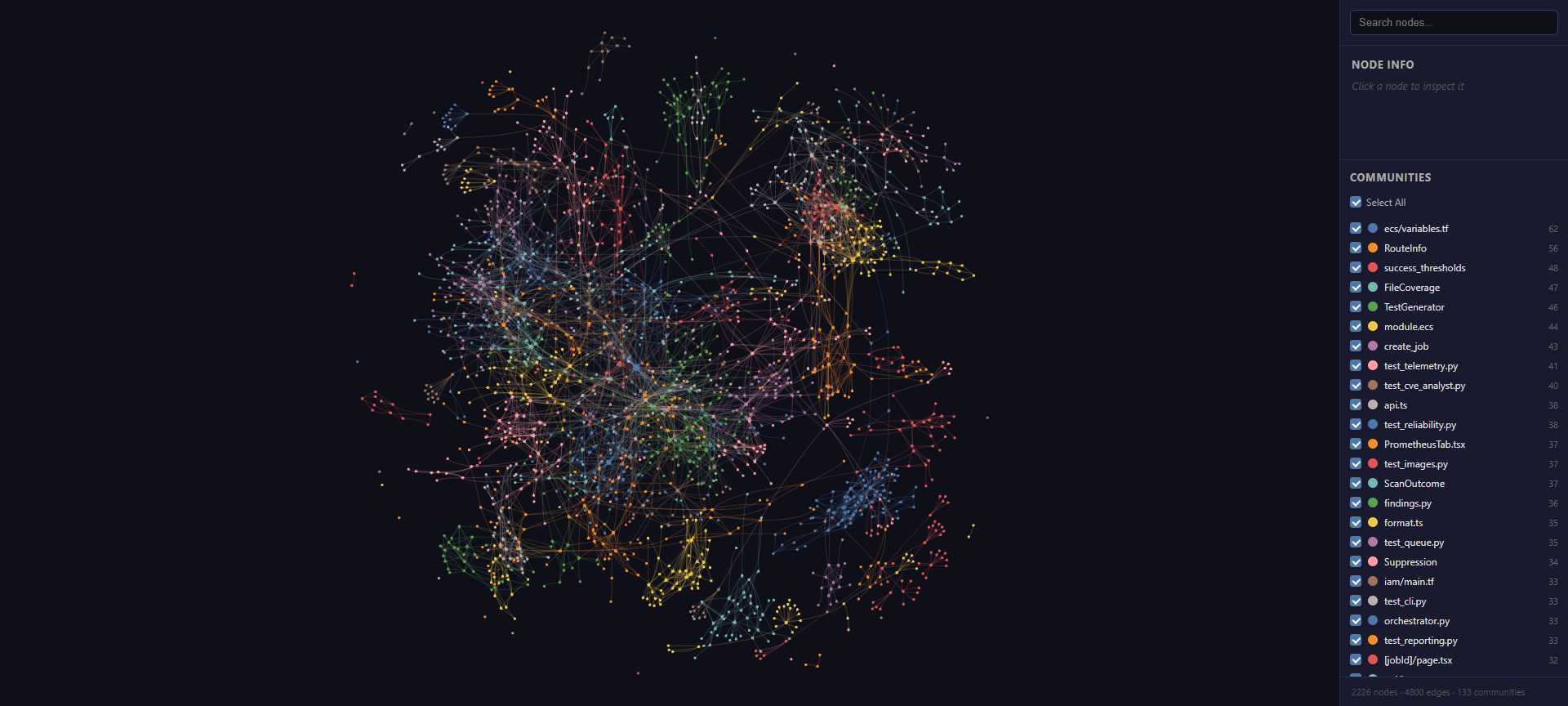
Interactive code graph
Every symbol in the repo across Python, TypeScript and Terraform, extracted from tree-sitter ASTs. It is live below - search a symbol, click a node to see its neighbours, untick a community to fade it out.
2,226
nodes
4,800
edges
133
communities
0
import cycles
Graph report
Community hubs, most-connected nodes, surprising connections.
Documentation
The portal - architecture, operations, audits and design records.
README
What was built, quick start, the API and the CI gates.
What a report looks like
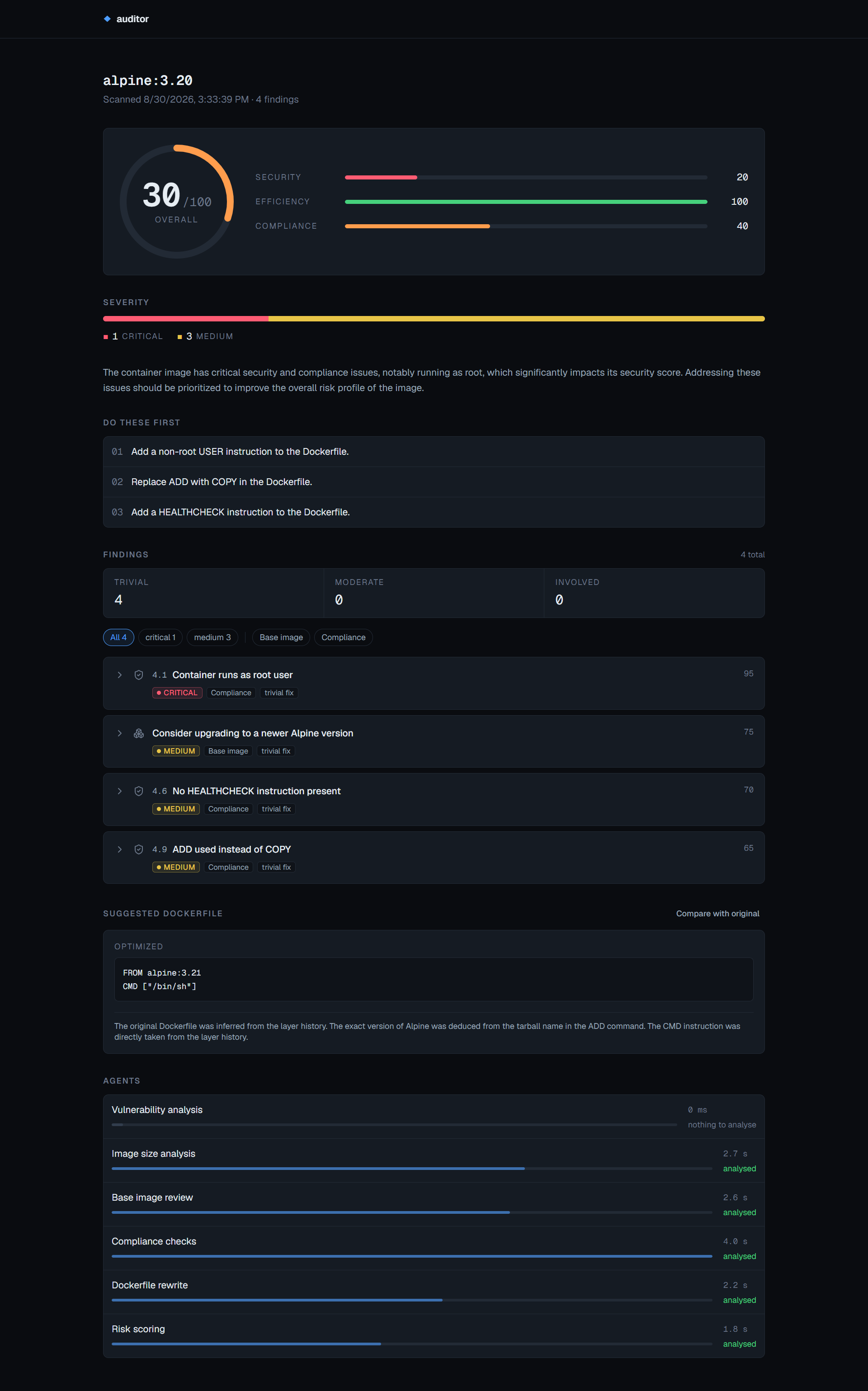
A real scan of alpine:3.20. In the agent panel, Vulnerability
analysis reports “nothing to analyse” at 0 ms
rather than being omitted, because Trivy genuinely found zero vulnerabilities. The other five
agents ran in 1.8s to 4.0s.
Choosing an image
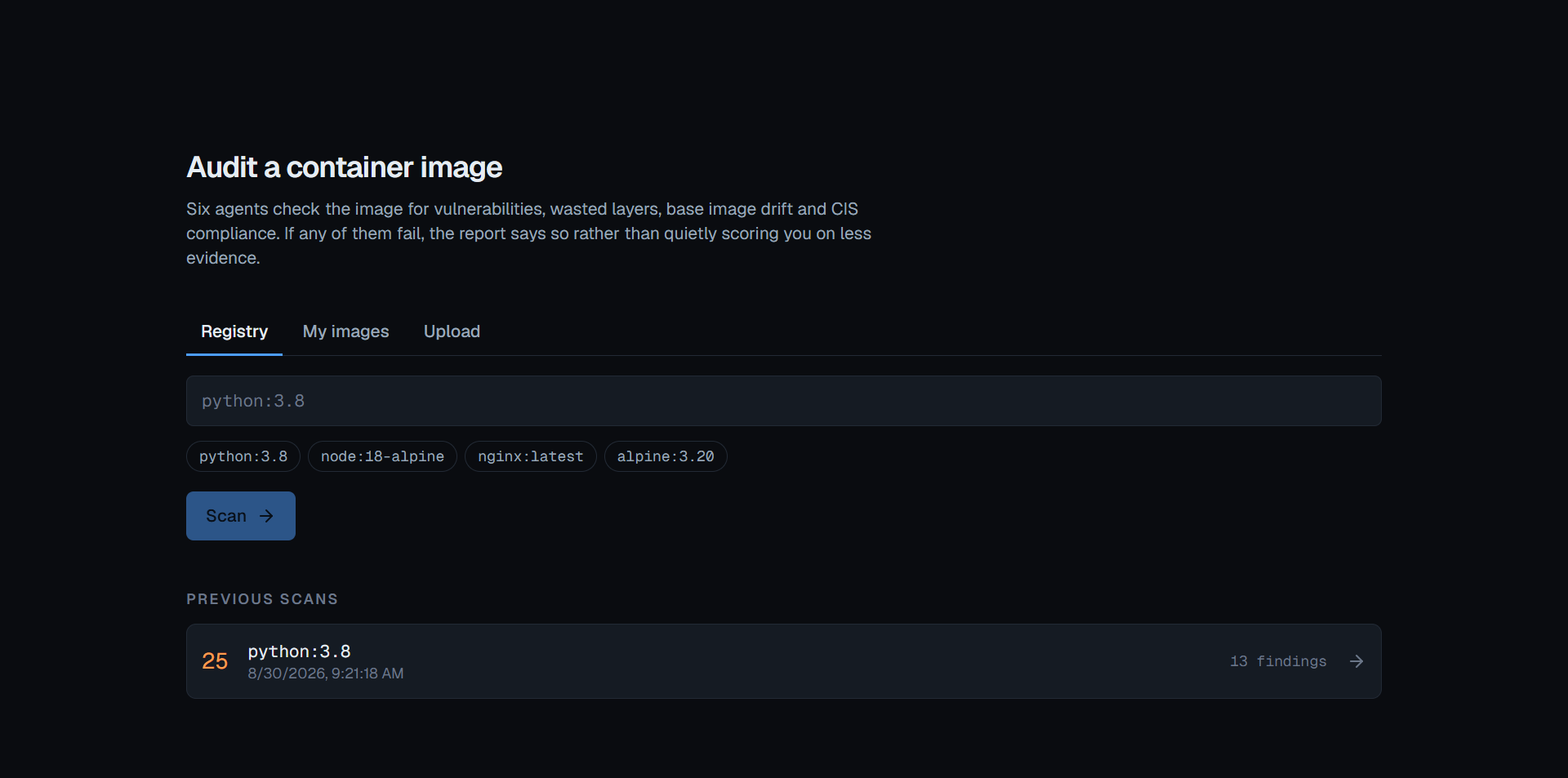
Registry
Type a reference, or take a preset.
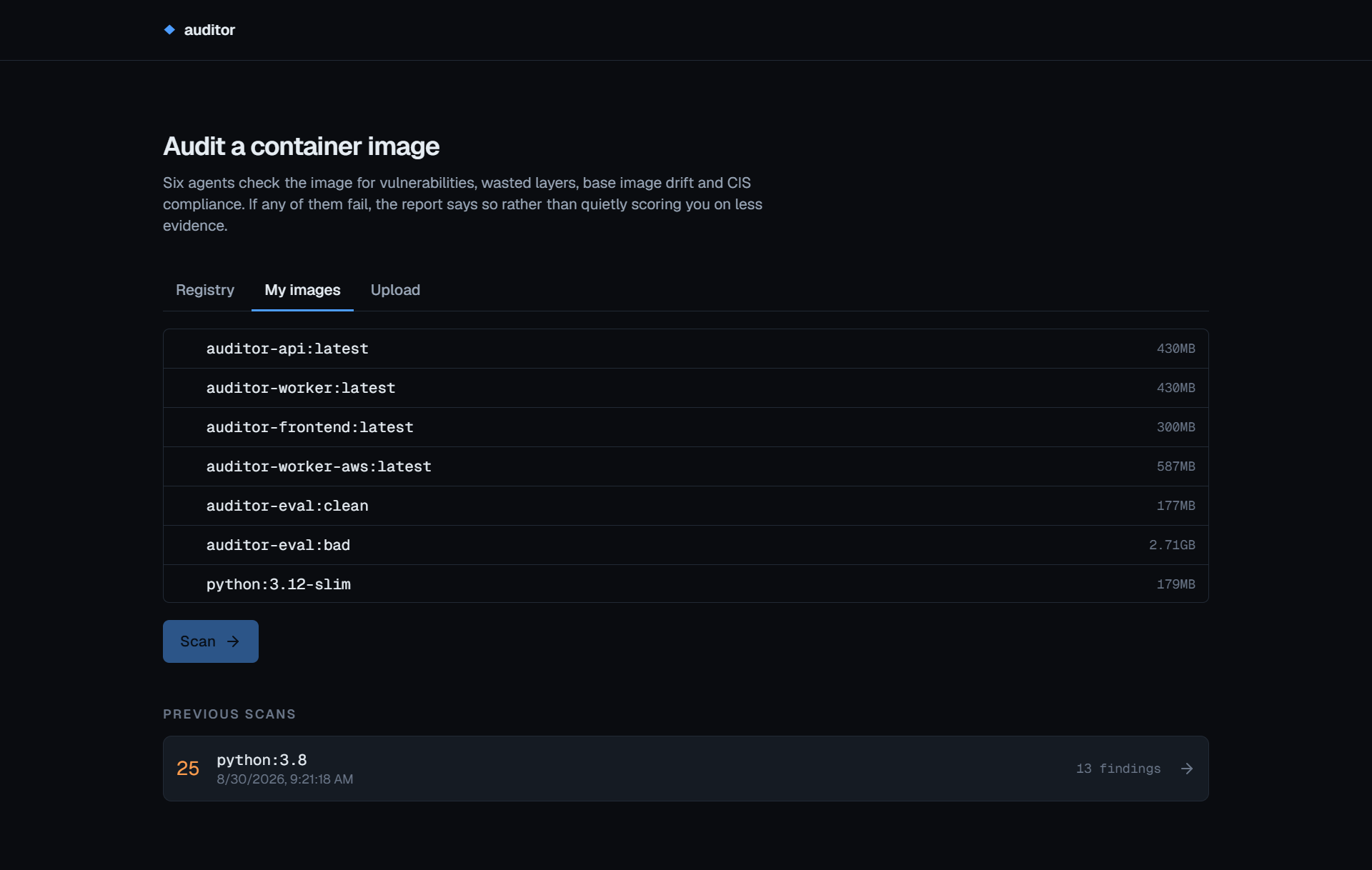
My images
Whatever is on the daemon, with sizes.
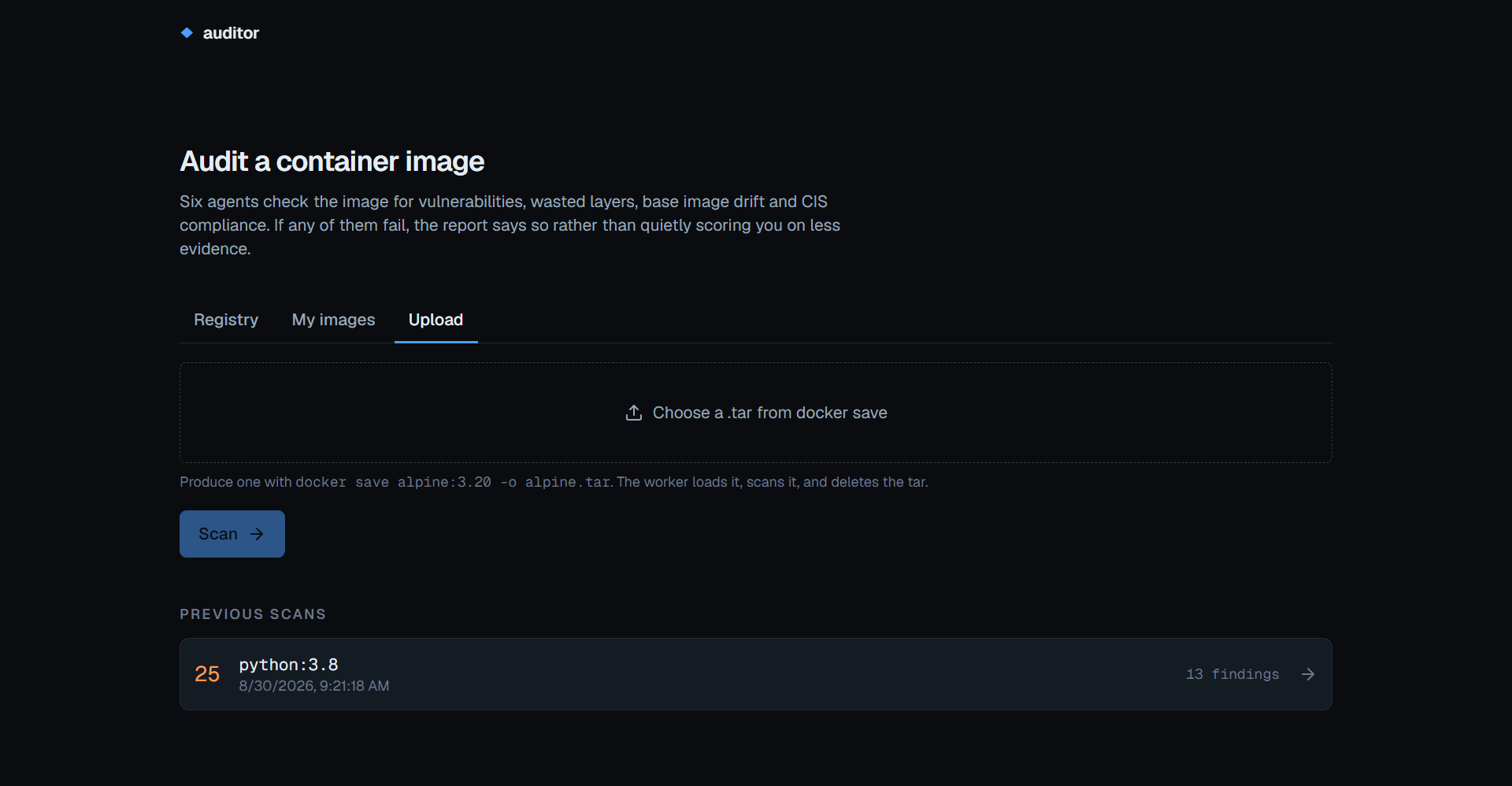
Upload
A
docker save tar, streamed to disk.Learning trail
- Scanner layer - Trivy runner and deterministic reduction
- The CVE analyst - structured output and fail-loud parsing
- Parallel agents, visible degradation, failure isolation
- Dependent agents, the fan-in, degraded inputs
- The evaluation harness - recall, precision, stability
- Persistence - hot/cold tables, tenant keys, the Decimal problem
- The queue - FIFO groups, visibility arithmetic, idempotency
- The API - verifying tokens, limiting cost, object-level authz
- Real-time progress - why in-memory fan-out cannot work
- The frontend - two kinds of state, backoff, honest degradation
- Containerisation - layers, ghosts, scanning your own work
- Infrastructure - build order, encoded fixes, what it costs
- CI/CD - OIDC, matrices, rollback, the gate that matters
- Observability - instruments for the failures that never raise